
CrocoApps case study
D-Corp — Windows / Linux Game Development Case Study
CrocoApps helped a cooperative game studio build a shared-screen defense game for Windows / Linux to make group play accessible through reliable controls and clear team responsibilities.
Project snapshot
| Industry | Local multiplayer systems |
|---|---|
| Platform | Windows / Linux |
| Genre | Cooperative defense action |
| Scope | Local cooperative gameplay, controller assignment and shared-screen readability |
| Status | Published project; see the project links. |
| Links | Project page |
| Engine | Unreal Engine 4 |
Source: Steam product page. Checked October 27, 2026.
Challenge
Players must understand their own responsibilities while sharing a single camera and interface. Input ownership, joining and leaving can create failures even when no network server exists.
Shared-screen cooperation creates a competition for attention even when the players are on the same side. Someone may need resources, another player may need ammunition, and an enemy may approach from a different direction. The scene has to communicate urgency without requiring every participant to inspect a separate interface.
Solution
CrocoApps connected player input assignment with shared-screen readability and cooperative task feedback. Controller reconnection, camera framing and resource placement support players working on the same objectives.
Gameplay and systems
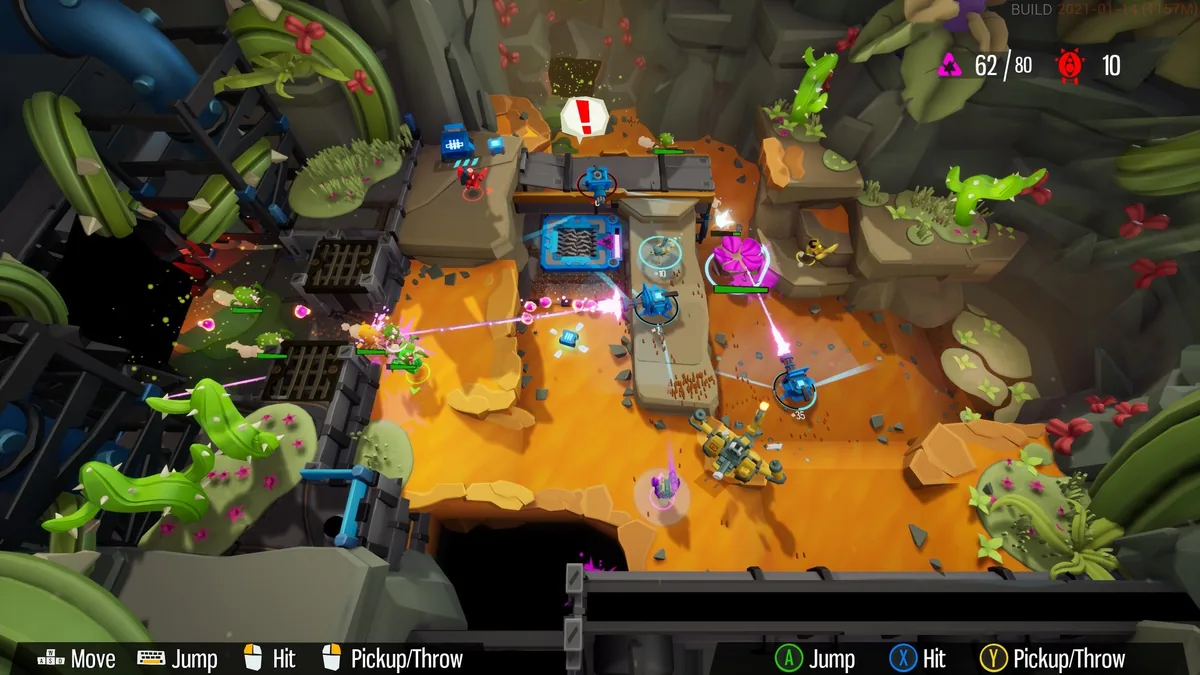
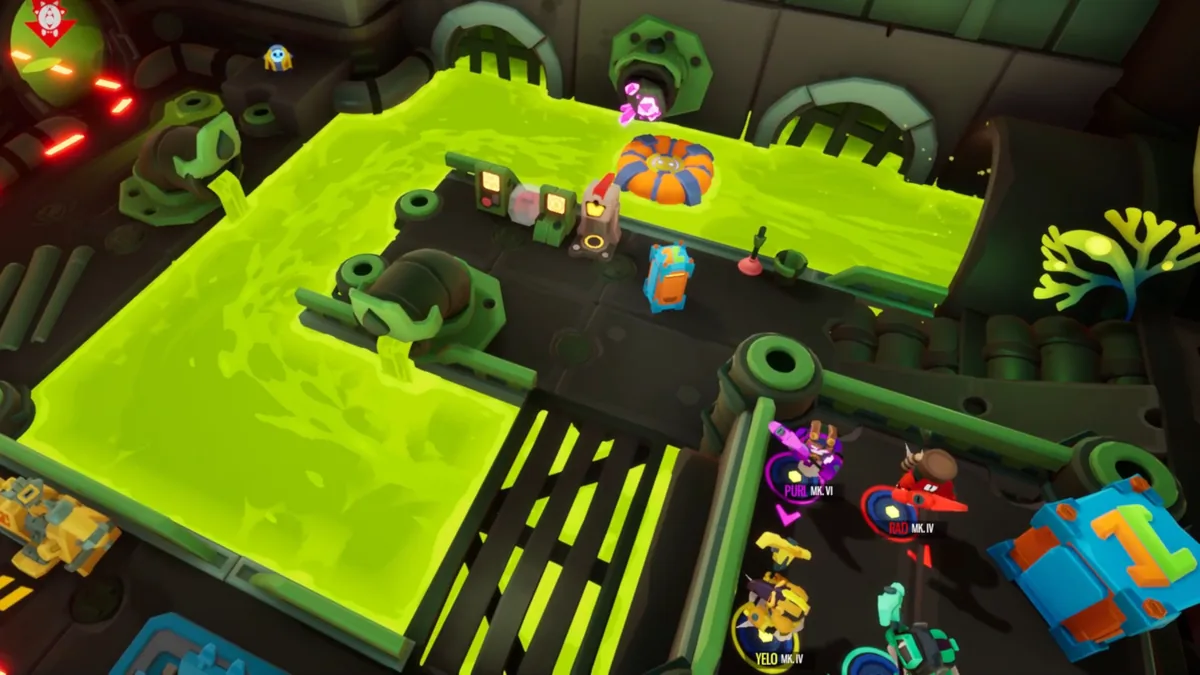
Up to four players operate a robot team under pressure from attacking alien cacti. Resources must be carried to a recycler, while turrets need ammunition, maintenance and repositioning. The game includes a cooperative campaign and a separate competitive arena mode. It is designed around gamepads and local play; Steam Remote Play Together provides the remote streaming option. Cosmetic hats offer an additional unlockable reward.
Source: Steam product page. Checked October 27, 2026.
- Core loop
- Collect resources, deliver them to shared objectives, maintain defenses, survive a wave and prepare for the next.
- Progression
- Defense waves and preparation between encounters.
- Economy
- Collect and recycle resources while supplying and maintaining defensive turrets.
- Multiplayer
- Local cooperative and versus play for up to four; remote sessions use Steam Remote Play Together.
- Localization
- English and German listed on Steam.
Production scope
Input ownership, camera framing and task feedback support the same cooperative loop. A player must recognize their character, understand what they can carry or operate, and recover if their controller disconnects. Visual distinctions in role and activity help the group coordinate while keeping the controls accessible to new participants.
- Game design
- Local cooperative gameplay, controller assignment and shared-screen readability.
- Development
- CrocoApps connected player input assignment with shared-screen readability and cooperative task feedback. Controller reconnection, camera framing and resource placement support players working on the same objectives.
- QA
- Disconnect controllers mid-action, join in different orders, test simultaneous interaction with one object and verify paused/resumed sessions. Review camera readability when players move apart.
Tech stack
Unreal Engine 4, identified in the published game credits on Steam. Remote shared sessions use Steam Remote Play Together.
Source: Steam product page. Checked October 27, 2026.
Project screenshots
Results
Public product figures from the source snapshot checked on October 27, 2026.
- Player reviews
- 77% positive from 36 Steam user reviews in the checked listing.
Source: Steam product page. Checked October 27, 2026.
Appreciation letter
Client testimonial
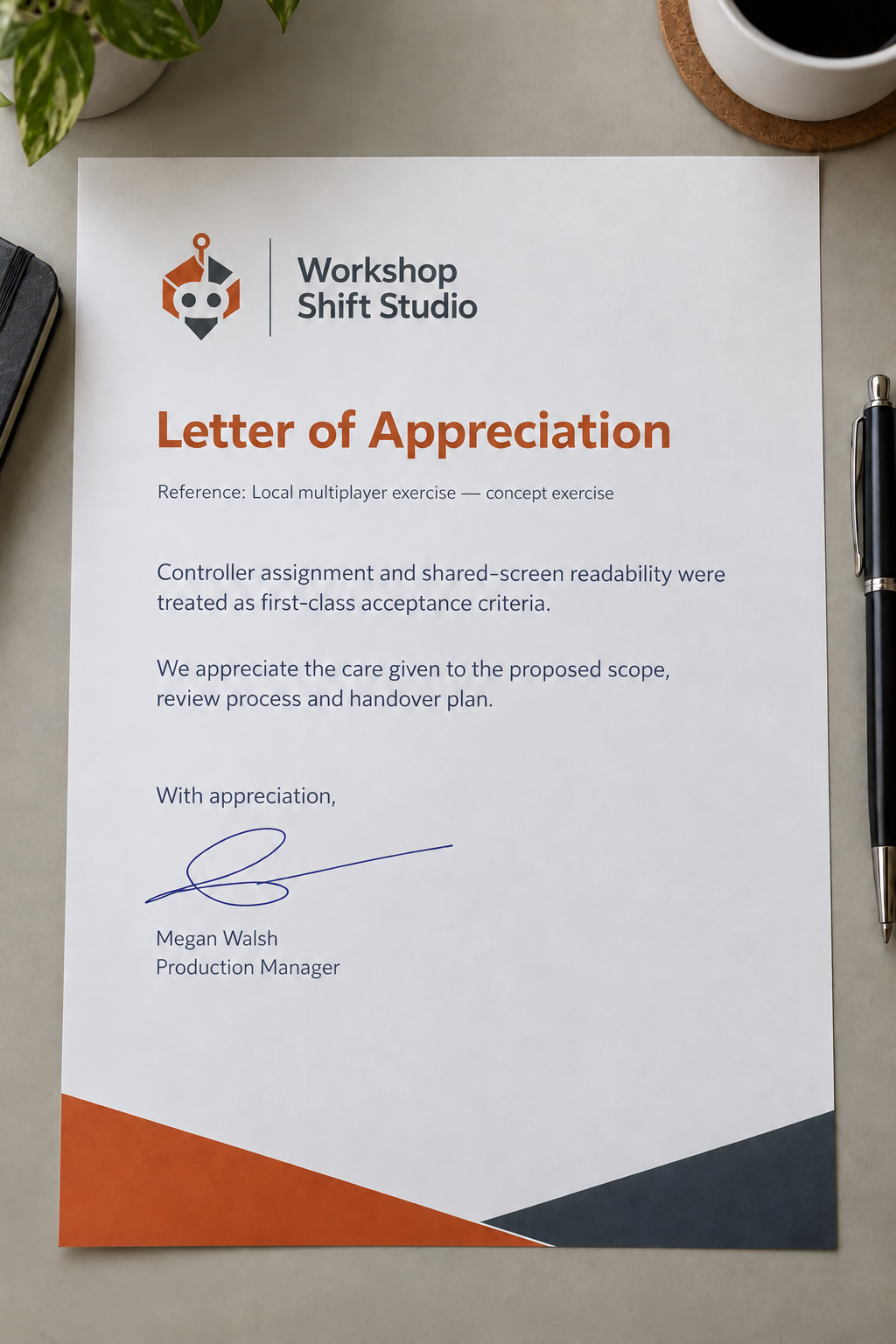
“The team kept the shared-screen experience at the centre of the review process. Controller assignment, visual clarity and the way players joined the action all received careful attention. We appreciated being able to try each change and discuss it together.”

What we learned
Local multiplayer has its own substantial systems work. Accurate scoping prevents a streaming feature from being mistaken for a network-service implementation.
Local multiplayer quality depends on the transitions around play as much as the main encounter. Joining, reconnecting and recovering a shared object should be understandable to the whole group, not only to the person holding a particular controller.
Build a similar game
Tell us about your audience, target platforms, core gameplay and business goals. We will help define the scope and estimate the work.