
CrocoApps case study
Thinkrolls 2: Puzzles For Kids — iOS / iPadOS Game Development Case Study
CrocoApps helped a children’s game publisher build a logic and physics puzzle game for iOS / iPadOS to support independent play through age-appropriate rules and feedback.
Project snapshot
| Industry | Educational game |
|---|---|
| Platform | iOS / iPadOS |
| Genre | Children’s logic puzzle |
| Scope | Children’s logic puzzles, accessible interaction and gradual progression |
| Status | Published project; see the project links. |
| Links | Project page |
Challenge
A child may understand the goal but struggle with a control, a visual cue or recovery after a mistake. These are different problems and should not all be interpreted as puzzle difficulty.
A child can fail because the rule is difficult, because the control is awkward, or because the instruction is unclear. Those causes look similar if the design observes only whether the level was completed. An accessible puzzle needs room to experiment and clear recovery so the reasoning task remains visible.
Solution
CrocoApps arranged puzzle interaction around gradual rule introduction, consistent visual feedback and immediate recovery. The design distinguishes control difficulty from reasoning challenges so children can understand the next action.
Gameplay and systems
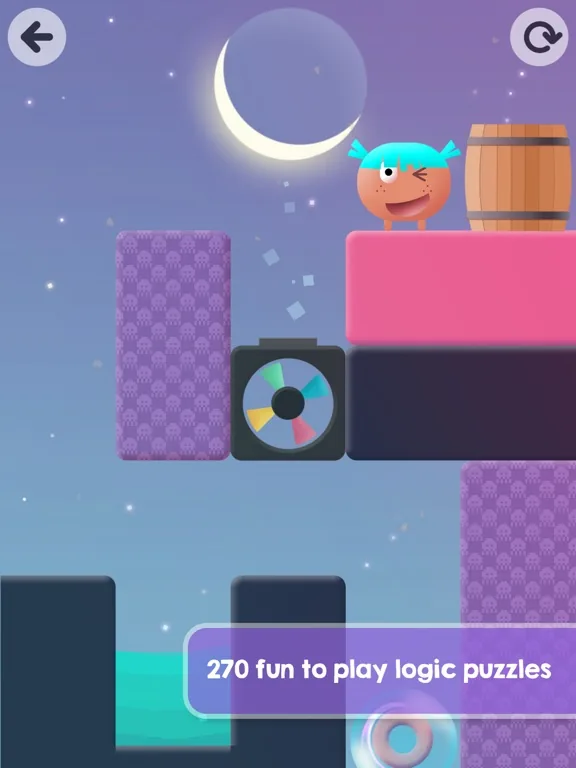
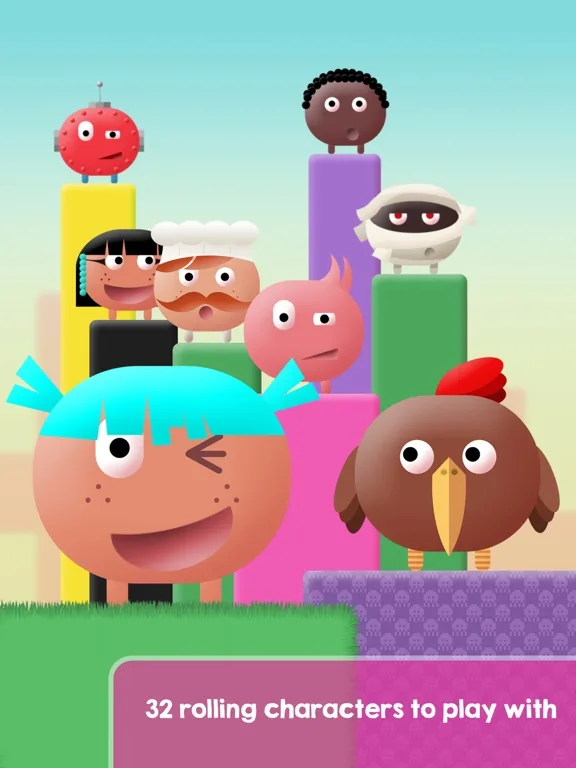
The game organizes 270 puzzles into two difficulty tracks: 135 for ages three to five and 135 for ages five to nine. Chapters introduce mechanics around floating, compression, airflow, electricity and teleportation before combining them. Up to six player profiles keep progress separate on a shared device. The publisher describes language-neutral gameplay and a paid app without third-party advertising or in-app purchases.
Source: US App Store. Checked October 27, 2026.
- Core loop
- Explore a compact level, move the character, test an obstacle interaction and reach the exit.
- Progression
- 270 puzzles divided into two age-oriented difficulty tracks.
- Monetization
- Paid app without third-party ads or in-app purchases.
- Localization
- Language-neutral gameplay; 15 listed app languages.
Production scope
Gradual rule introduction gives each interaction a recognizable purpose before it appears in a more complicated arrangement. The visual response, character movement and obstacle behavior need to reinforce the same explanation. This makes a new chapter a chance to extend a familiar mental model rather than relearn the interface.
- Game design
- Children’s logic puzzles, accessible interaction and gradual progression.
- Development
- CrocoApps arranged puzzle interaction around gradual rule introduction, consistent visual feedback and immediate recovery. The design distinguishes control difficulty from reasoning challenges so children can understand the next action.
- QA
- Test accidental repeated input, quick retries, profile switching and save restoration. Review contrast, non-color cues and touch-target placement. Record where assistance is needed without making unsupported developmental claims.
Project screenshots
Results
Public product figures from the source snapshot checked on October 27, 2026.
- App rating
- 4.5/5 from approximately 7,500 ratings on the US App Store.
Source: US App Store. Checked October 27, 2026.
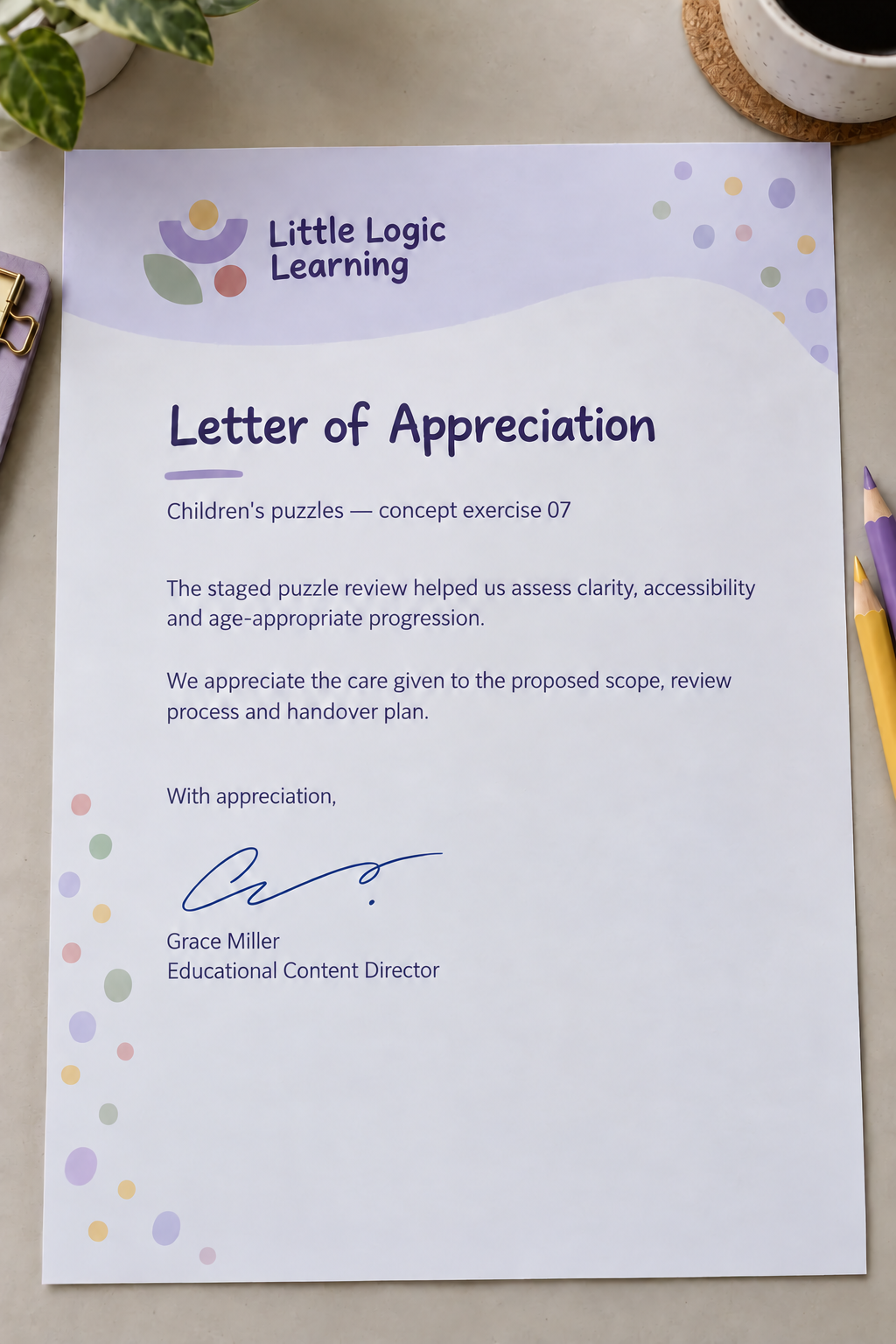
Appreciation letter
Client testimonial
“The team approached the puzzles from a child's point of view. We could review how a new idea was introduced, how the challenge developed and where clearer feedback was needed. That patient, structured approach made collaboration straightforward.”

What we learned
The most useful usability finding is often why a player needed help, not simply whether they finished the level.
For children’s products, supporting independent experimentation matters more than simply reducing difficulty. The player should be able to try, observe and recover without an adult translating every error into the next action.
Build a similar game
Tell us about your audience, target platforms, core gameplay and business goals. We will help define the scope and estimate the work.